

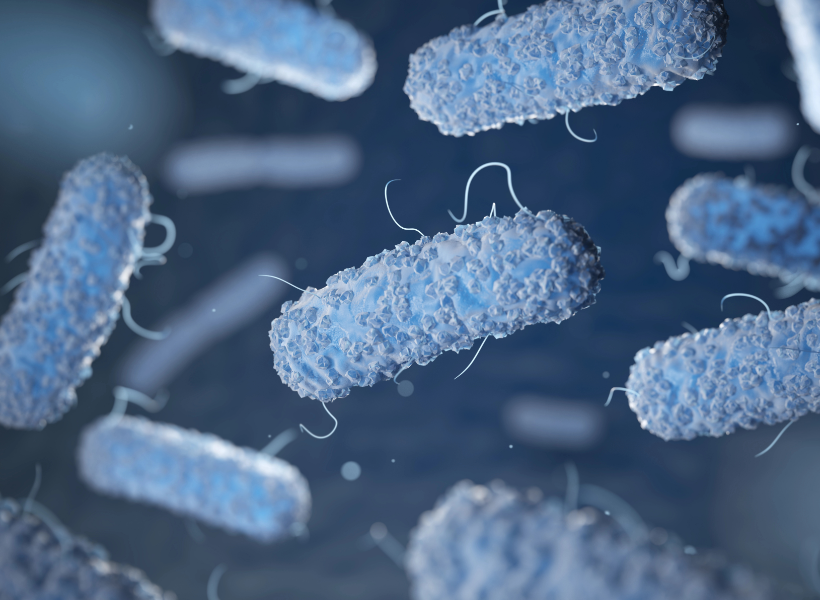
E. coli and Colorectal Cancer: What Does the New Study Tell Us?
Recent studies have raised questions about the role of Escherichia coli (E. coli) in the development of colorectal cancer, particularly among younger adults. As some of these bacteria can produce DNA-damaging toxins, an important question arises: Could this discovery also have implications for drinking water? To understand the connection, it is essential to what E. coli presence means for water safety.
How is E. coli Linked to Colorectal Cancer?
What is E. coli?
Escherichia coli (E. coli) is a rod-shaped bacterium commonly found in the intestines of humans and warm-blooded animals. While most variants are harmless, some of them can cause infections or produce harmful toxins. Through human and animal waste, E. coli can also enter the environment, contaminating soil, food and water. Its presence in drinking water is an important indicator of potential faecal contamination, making it a key parameter in water quality testing.
What do the DNA findings reveal?
Certain variants of E. coli living in the gut can produce colibactin, a bacterial toxin that damages DNA in intestinal cells. Scientific evidence highlighted in a recent report from The Guardian shows that mutations linked to colibactin were three times more common in colorectal cancer tumors from people under 40 than in those over 70. This striking contrast has positioned colibactin as a leading focus among researchers studying the global rise in early-onset colorectal cancer.
Early-life exposure to E. coli
Scientists suspect that exposure to colibactin may happen much earlier in life than the age at which colorectal cancer is diagnosed. Professor Mike Stratton's research found evidence of colibactin-related mutations appearing as early as infancy. By age 10, some affected children had accumulated a similar level of DNA mutations, known as a “mutational burden”, to that seen in a 50-year-old. Researchers note that these early cellular changes could give tumors a significant head start later in adulthood.
The Connection Between E. coli and Drinking Water
E. coli found in human guts and E. coli detected in water belong to the same bacterial species, but they represent different contexts of exposure.
While certain gut strains may produce colibactin, bacteria entering water through faecal contamination can include other variants, some of which cause intestinal infections. Contaminated drinking and recreational water are recognised routes of exposure to harmful bacteria, particularly where sanitation and water treatment are inadequate. However, finding E. coli in water does not automatically mean cancer-associated variants are present.
E. coli—An indicator in drinking water quality testing
E. coli is one of the key microbiological parameters monitored during drinking water quality inspections. According to the World Health Organization (WHO), E. coli must not be detectable in any 100mL sample of drinking water. Vietnam's National Technical Regulation (QCVN 01-1:2024/BYT) also sets the acceptable limit at less than 1 CFU/100mL or MPN/100mL, meaning no detectable E. coli in the tested sample.
When E. coli is detected, it signals that human or animal waste may have entered the water supply and that the source needs to be checked. Possible causes include poor disinfection, damaged pipes, contact with wastewater or contamination during storage.
How Can You Prevent E. coli Contamination in Water?
Clean water pipes and storage tanks regularly
Over time, sediment, damaged pipe connections and poorly maintained tanks can create opportunities for contamination. Regularly inspect pipes, joints, valves and tank covers for leaks or damage. Storage tanks should also be drained, cleaned and disinfected at appropriate intervals, following professional guidance.
Use chlorine disinfection correctly
Chlorination is a widely used method of water disinfection that helps eliminate E. coli and other harmful bacteria. In public water supplies, treatment facilities control chlorine concentration to achieve effective disinfection with an appropriate residual. For private water sources, disinfection using chlorine should follow professional instructions for personal safety.
Install UV/UF disinfection
Installing UV/UF disinfection creates a strong barrier for your domestic water. UV treatment damages the genetic material of microorganisms, preventing bacteria such as E. coli from reproducing. UF, meanwhile, uses a fine membrane to physically separate bacteria and suspended particles from water. With these strong treatments, households can enjoy greater confidence in the quality of their tap water.
Test your water source periodically
Visual clarity never guarantees microbiological safety, as E. coli is completely invisible, tasteless, and odorless. Scheduling a certified water quality test at least once a year—or after any plumbing work or tank servicing—gives homeowners clear verification that their tap water meets strict drinking standards with zero E. coli detected.
Staying informed about emerging health research is valuable, yet everyday wellness still comes down to consistent, practical habits. By understanding how E. coli is monitored in water quality testing and taking proactive steps to keep pipes, storage tanks, and filtration barriers in top condition, you can ensure your household enjoys clean, safe, and refreshing water every day.
Source: Sample, I. (2026). Bacterial toxin produced by E coli leading suspect in rise in bowel cancer among under-50s. The Guardian.
- Log in to post comments